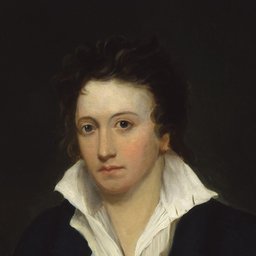
English Romantic poet of visionary lyricism, political idealism, and restless imagination, celebrated for works of wind, revolt, mourning, and prophetic hope.
Radical Beginnings
Percy Bysshe Shelley was born in 1792 and quickly became identified with both poetic brilliance and political rebellion.
His expulsion from Oxford, controversial views on religion and authority, and unsettled personal life are part of the legend, but the deeper fact is that Shelley's poetry never separates imaginative freedom from moral or political aspiration. He writes as if lyric intensity and historical transformation ought to belong together.
That ambition makes him one of the most daring of the Romantics. Even when he fails, he fails in the direction of enlargement.
Lyric Energy and Major Poems
Shelley's best-known poems display a remarkable ability to turn natural force into intellectual and emotional momentum.
"Ode to the West Wind," "To a Skylark," "Adonais," and many shorter lyrics combine music, speed, abstraction, and image with unusual fluency. The poems often feel wind-driven in the best sense: propelled, open, and resistant to confinement.
He could also work on larger imaginative scales, as in Prometheus Unbound, where drama, myth, and visionary speculation converge. Shelley wanted poetry to be more than reflective; he wanted it to be transformative in spirit and implication.
Idealism, Love, and Fragility
Shelley's poetry can seem exultant, but it is never untouched by loss, disappointment, or mortality.
His belief in liberty, love, and mental awakening exists alongside acute awareness of historical violence and personal vulnerability. Elegy, protest, desire, and prophecy continually intersect. He is one of the poets most likely to turn lament into motion rather than closure.
This tension is part of his enduring appeal. Shelley's idealism is not the innocence of someone unaware of pain; it is the hard, recurring effort to imagine freedom in spite of it.
Legacy
Shelley matters because he fused verbal brilliance with one of the strongest imaginative investments in freedom anywhere in lyric poetry.
Later poets and political readers alike have returned to him for his audacity, his music, and his sense that poetry should enlarge the possible. Even readers suspicious of his rhetoric often find themselves moved by the sincerity and pressure of the attempt.
For public-domain readers, Shelley offers one of the great experiences of lyric propulsion: poems that seem to think at the speed of weather while still carrying genuine philosophical weight.
Discover the best poems by Percy Bysshe Shelley on The Poet's Place. Read the greatest, most popular, and trending poetry by Percy Bysshe Shelley. From beautiful and inspiring verses to famous, timeless classics — explore the most loved and iconic Percy Bysshe Shelley poems for free.